After more than thirty years in education across several countries, I am suspicious of the word system. It suggests something designed, coherent and accountable, a set of parts that fit together under someone who understands the whole. That is no longer what many of us experience. In much of the world, the people working inside public education are creating coherence where the institution itself is losing it.
Teachers, educational assistants, principals, office staff, parents and students create coherence together. Institutions matter, which is exactly why their weakening matters. When capacity falls, somebody still holds the pieces together, and more and more that somebody is the adult standing in front of the students.
The pandemic did not create every problem in our schools, but it exposed them. It showed how much learning depends on stability, belonging and trust, and how much invisible work school staff were already doing. When formal structures strain, people compensate. They make the call after hours, find another way to reach a child tyring to learn, and design a project because the prescribed solution does not fit the students in the room. Over time, improvisation becomes the operating model. #Chaos is also a kind of order, one we have not yet learned to name.
Teachers belong in the design of education policy, not in a consultation held after the important choices are made. We carry enormous professional responsibility with comparatively little institutional power. We decide when a lesson must change, notice the student who has gone quiet, build relationships with families, and adapt all day long. Yet the decisions that shape our work are made far from the classroom. We are not always right, but proximity matters. The person closest to a problem often sees what the person managing it cannot.
Most people meet the state through the institution closest to them, whether a school, a hospital or a local office. When those institutions cannot respond, trust erodes, and people go looking for community elsewhere. Democracy is more than elections. It is the everyday practice of living alongside people who are different from us and working out how to do something together. Schools rehearse that practice every day.
The practical hope is to look for what is already working and ask what conditions allowed it to happen, then create more of those conditions. That kind of reform starts with capacity rather than compliance, and with people rather than structures.
Institutional coherence can weaken without human coherence disappearing. In my classroom, young people from very different places are learning to belong to something together. A project becomes a shared purpose, a difference becomes a way to understand someone else, and a twelve-year-old discovers they have something to contribute. That is how cohesion is built, one classroom at a time.
What if students could hold real ownership of their work, or “NFTing” their effort, and what if that ownership could stimulate a local economy using the human capital already in any classroom, school, and neighborhood? Ownership of a student’s intellectual property is the precondition for a market to exist around their work at all. Without it, a talented kid in a struggling neighbourhood can stay invisible, no matter what they build.
Innovation in Education have been working with an outstanding global team including https://thesolo.network/ to develop Lern2Ern.com and this week, Lern2Ern placed in the top 25 percent of over 2,200 projects, reviewed by more than a thousand judges. We’re looking for institutional partners to pilot this at scale, and investment to build out the pathways already in motion. We especially want K-20 in this room. If blockchain-verified ownership is going to become real infrastructure for global cooperation in #education, universities and school districts globally should be building it with us, not adopting it later.
The MIT AI Committee released its report on August 28, 2026. The finding that matters most for teachers is that AI can already produce credible responses to almost any written assignment, including essays, math problems, and design work. The question the report does not answer is what to do about it in a classroom today.
There are three sprints. Each one is a standalone tool. Each one is free. Each one produces a body of student work that AI cannot replicate, because the evidence is hand-made, documented over time, and confirmed in a live interview or a public launch. When the sprint is done, teachers submit the work to Innovation in Education and we upload verified badges to the Lern2ern® platform. The work belongs to the students, not the school and not us.
Here is what each sprint builds.
The Rule-Maker’s Sprint (1,000 XP, 6 badges) runs in the first two weeks of school and is designed for Visual Arts classrooms at middle and high school level. Students study seven artists who set rules for themselves — Andy Goldsworthy, Deborah Butterfield, Kehinde Wiley, Christi Belcourt, Norval Morrisseau, Agnes Martin, Yayoi Kusama* your choice — then set their own rules and make a series of three to five connected artworks that follow them. The sprint closes with a 12-to-15-minute Lerner Interview. The question that confirms the final badge is the same one every creative professional faces eventually: show me the sketch that became this. XP is awarded against the Biggs and Collis SOLO Taxonomy, with the Critical Analysis Badge and the Rule-Maker Capstone Badge together worth 600 XP at the Relational and Extended Abstract levels.
The Graphic Narrative Sprint (2,240 XP, 7 badges) runs across the first semester for Visual Arts and Language Arts classrooms. The principle at the centre of it is A + B + C = D. D belongs to you. Students research a minimum of five existing heroes and five existing villains from diverse sources — comics, mythology, film, animation, history — and synthesise two original characters from that research. The finished characters must be traceable to the research templates in the sketchbook. AI can generate any A, B, or C. Only the student can produce D, because D is the record of choices made over months and confirmed at the badge interview. Semester 1 is fully analog. No AI tools until Semester 2, when students direct AI production tools as authors rather than passengers, with every AI output traceable to a prior hand-drawn original.
The A/B Test Cycle (1,600 XP, 5 badges) is the social-entrepreneurship sprint and it runs independently of the other two. It follows the full entrepreneurship cycle from user persona to public launch to data-based decision. Students build a persona grounded in a specific real person’s real pain, test two versions of a solution with a real crowd under simultaneous conditions, and make a decision grounded in what the data actually says. The Analyse badge (400 XP) is awarded at Extended Abstract level — the highest SOLO level — because making an honest data-based decision and presenting the full project arc to an external audience is genuinely demanding work.
A student who completes all three sprints earns 4,840 XP across 18 badges. That record covers Visual Arts, Language Arts (Media Literacy), Social-Entrepreneurship, and, where the math component is included, mathematical reasoning and data literacy. It is built from sketchbooks, research templates, character sheets, prototypes, feedback forms, launch records, math notebooks, and oral interviews. It is not a grade. It is evidence of what the student can actually do, confirmed by a person, traceable to artifacts, and owned by the student permanently.
The model is straightforward. The sprint tools are free. Teachers download the documentation, run the sprint, and collect the evidence. When the sprint closes, they submit the XP Trackers, sketchbook photographs, interview notes, and launch records to Innovation in Education. We review the work against the Artifact Integrity Test and upload verified badges to the Lern2ern® platform. The badge upload and bespoke customer service operate on a subscription basis. One session of teacher training is all that is needed to launch any of the three sprints.
Bespoke customer service means a person, not a help desk. It means someone who knows the sprint, knows the rubric, and can answer a question about a specific student’s sketchbook.
If you want to run one of these sprints with your class, the starting point is a conversation. Email info@iiedu.ca with your name, school, and which sprint you want to start with. We will send the full documentation and confirm training.
The tools are free. The thinking is the students’. The badge is proof.
The Graphic Narrative Sprint is a two-semester programme for Grades 6, 7, and 8 that runs across Visual Arts and Language Arts. Students design original hero and villain characters. They build a sequential graphic narrative. They produce a 15 – 60 second original movie teaser. And they do it in a specific sequence: first by hand, then with AI tools as a production instrument, never as a thinking replacement.
Semester 1 is analog only. Sketchbooks. Notebooks. Pencils. Research. Semester 2 introduces AI tools — Canva, CapCut, Suno — in a structured, documented, teacher-supervised sequence. Every AI image generated must trace back to a hand-drawn sketch. Every AI audio track must follow a handwritten script. The teacher’s interview question at every badge is the same: show me the sketch that became this.
The package includes a student handbook with worksheets and meta-checklists for all eight badges, a student handout, a family and caregiver guide written in plain language, and a teacher reference document with full Ontario curriculum alignment, Growing Success assessment strategies, Learning Skills connections, and badge-by-badge differentiation notes for Grades 6, 7, and 8. All documents are licensed under Creative Commons Attribution 4.0. You can share them, adapt them, build on them — as long as you give credit.
To download the full package, we ask one thing: your email address. You will receive the resources and you will also receive occasional updates from Lern2ern about new resources, pathway developments, and the work we are doing to put credential ownership in the hands of learners rather than institutions. You can unsubscribe at any time, with one click, no questions asked.
We are not selling your data. We are not hiding the resources behind a paywall. We are building a community of educators who believe that students should own what they make, that AI should serve the learner’s ideas rather than replace them, and that the sketchbook is not an obstacle to digital production — it is the proof that the digital production is real.
If you are a teacher who has been waiting for something you can actually hand a Grade 7 student and say: this is yours, work through it, bring it to me when you’re done — this is that thing.
Get the full Graphic Narrative Sprint resource package below.
Lern2ern is a skills-first credentialing platform that issues blockchain-verified Learning Employment Records through the SOLO Network on Hedera Hashgraph. Student intellectual property ownership is the non-negotiable foundation of everything we build. lern2ern.com
Note: accomodations include time and complexity – Good Luck!
In today’s dynamic educational landscape, the importance of personalized professional development (PD) for teachers cannot be overstated, especially when it comes to fostering creativity in the classroom. Teachers operate in varied scenarios, whether independently or within a school district, and each context presents unique challenges and opportunities. Regardless of the setting, the primary goal remains the same: to enhance the learning experience for students by encouraging creativity and critical thinking.
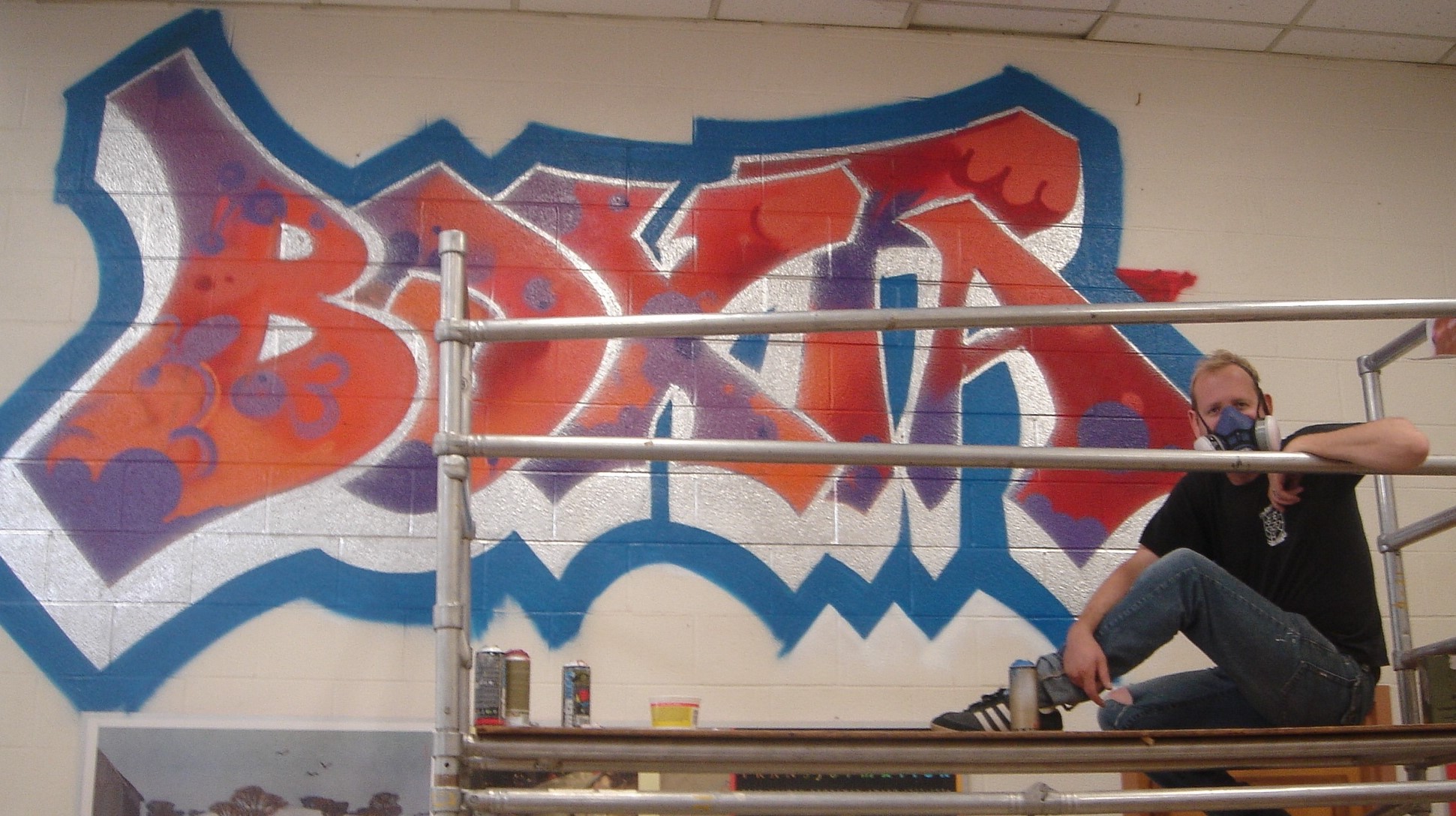
BOXTA 2008
The local context in which a teacher operates significantly influences their professional development journey. In regions where the education system is aligned with the goals of the government, teachers may find themselves encouraged to pursue PD. Conversely, in areas experiencing defunding and de-professionalization, teachers may struggle to access the resources they need. This disparity underscores the need for a more individualized approach to PD, one that prioritizes the teacher’s personal growth and the creative needs of their students.
Professional development should be viewed as a creative endeavor in itself. For me, PD serves my own learning and creativity, which, in turn, benefits my students. My interest lies in improving the student experience, and I actively seek feedback to guide my efforts. It’s crucial to provide students with opportunities to be creative, both inside and outside the classroom. As educators, we must model this behavior, demonstrating that creativity is a valued and integral part of learning.
To foster a creative classroom environment, teachers should be encouraged to conduct action research and develop innovative solutions to the challenges they encounter. This approach requires adopting a project management mindset, focusing on identifying problems and implementing effective solutions. Participation in initiatives such as the Reimagine Education competition, which provides sophisticated guidelines that can be scaled, exemplifies how teachers can transform their classrooms into incubators of ideas and solutions, with their students and communities.
Classrooms that prioritize creativity become breeding grounds for innovative thinking and problem-solving. School districts that support this vision should act as accelerators, providing funding and professional development to help scale these innovative solutions. Most do not.
Critical thinking is a necessary component of any creative endeavor. Traditional summative evaluations often lack room for improvement, failing to allow for iterative processes that encourage reflection and analysis. This rigid approach can be oppressive, demanding compliance from students without fostering their intrinsic motivation. When students engage in iterative processes, they transition from extrinsic to intrinsic motivation, driven by questions that matter to them. Teachers and mentors play a crucial role in guiding this process, helping students to embrace change and pursue creative solutions.
The concept of homework should be reframed as studying, emphasizing the importance of personalized and differentiated learning. Students need the freedom – the space – to curate their own learning materials, documented through sketchbooks, notebooks, and digital tools. These artifacts become valuable resources that can be digitized and used to inform personalized learning experiences – or sandboxes – which will support their usage of artificial intelligence.
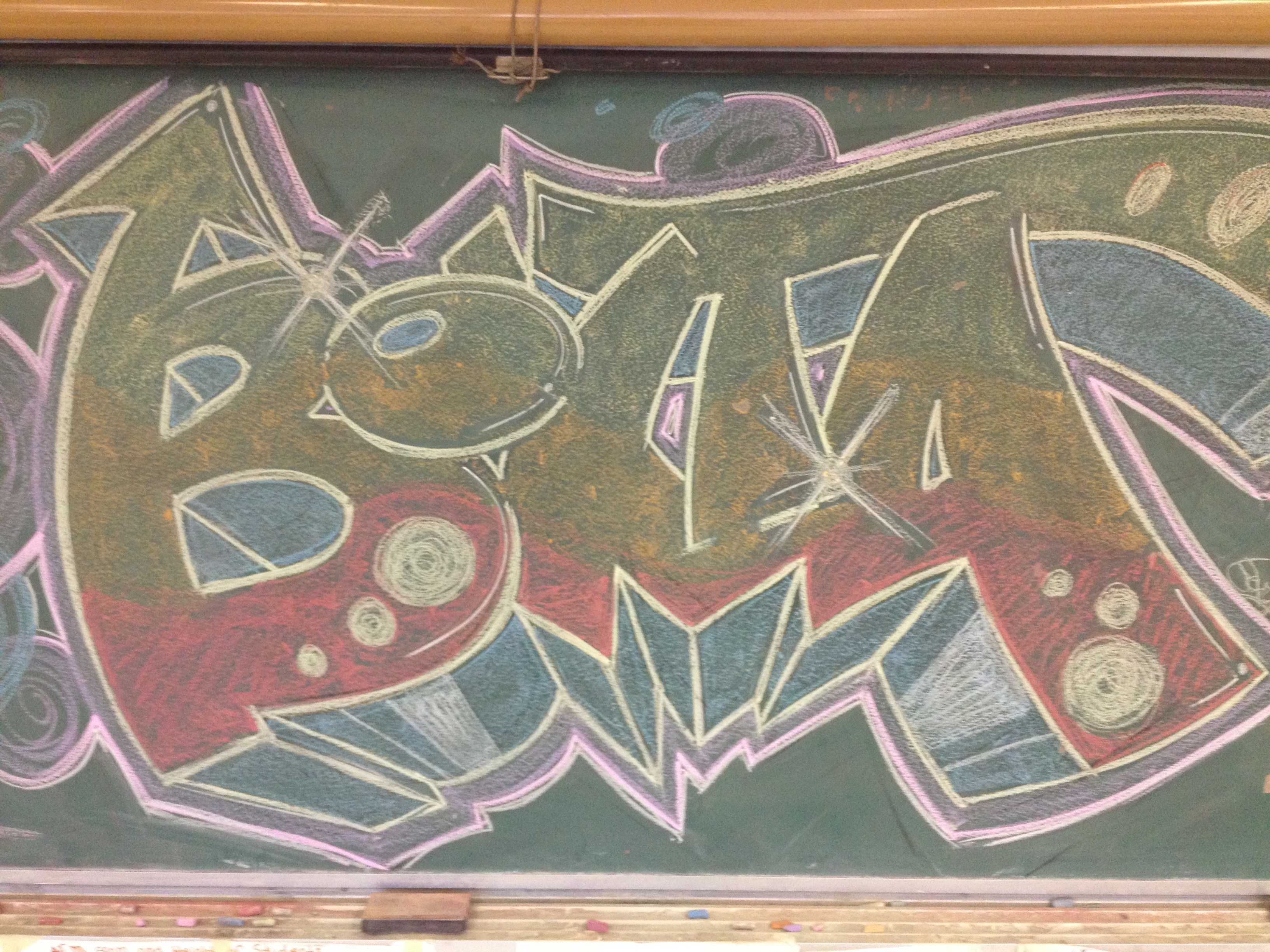
BOXTA 2009
Measuring competencies presents a challenge but is not impossible. In Ontario, for instance, ‘learning skills’ are reported on, highlighting the importance of educating parents and guardians about the value of competencies beyond traditional numeric grades. The current educational climate in Ontario, marked by government defunding, poses significant challenges. Student demographic data, including demographics, absences, and report card marks, are now managed by companies like PowerSchool, owned by private equity firm Bain Capital. These entities (‘Education Leaders’) prioritize cost-cutting measures, such as reducing staffing, hardware purchases, tutoring programs, and teacher salary increases, which ultimately undermines the quality of education. In this context, who are our students actually working for?
To counteract these challenges, teachers must empower students to control and articulate their learning journeys. By teaching students to value their data and use it to inform their learning processes, we can foster a generation of creative and independent thinkers. This shift from education to learning involves engaging students in solving local problems and sharing their solutions globally, facilitated by digital platforms and open-source networks (web3!).
The future of education/learning lies in the intersection of global and local contexts, where personalized learning and creativity are prioritized. Technologies such as Web3 and blockchain will drive this evolution, offering new opportunities for engagement and innovation. Teachers and students should own and share their intellectual property on open-source networks and blockchains, ensuring that knowledge is democratized and accessible to all.
Ultimately, teachers should not rely solely on school or district PD programs, which often focus on meeting funding requirements rather than addressing teachers’ expertise and skill sets. Professional development should be personal, driven by the projects and solutions that inspire teachers to improve their students’ experiences. By building their own learning networks and sharing their work globally, teachers can model the freedom and creativity they wish to instill in their students.
BOXTA 2016
In conclusion, personalized professional development is essential for fostering creativity in the classroom. Teachers must be fierce advocates for their own learning and creativity, taking risks and engaging in processes with unknown outcomes. By creating spaces for students to connect with the analog world before engaging digitally, we can cultivate a learning environment that values creativity, critical thinking, and continuous improvement. Together, we can redefine professional development and empower teachers to transform their classrooms into vibrant, innovative spaces for learning, with or without school districts.
Innovation in Education is a blog dedicated to innovating education. All work posted on this website is free to use under a Attribution-NonCommercial 4.0 International(CC BY-NC 4.0). All opinions and views expressed here are of the Principal.