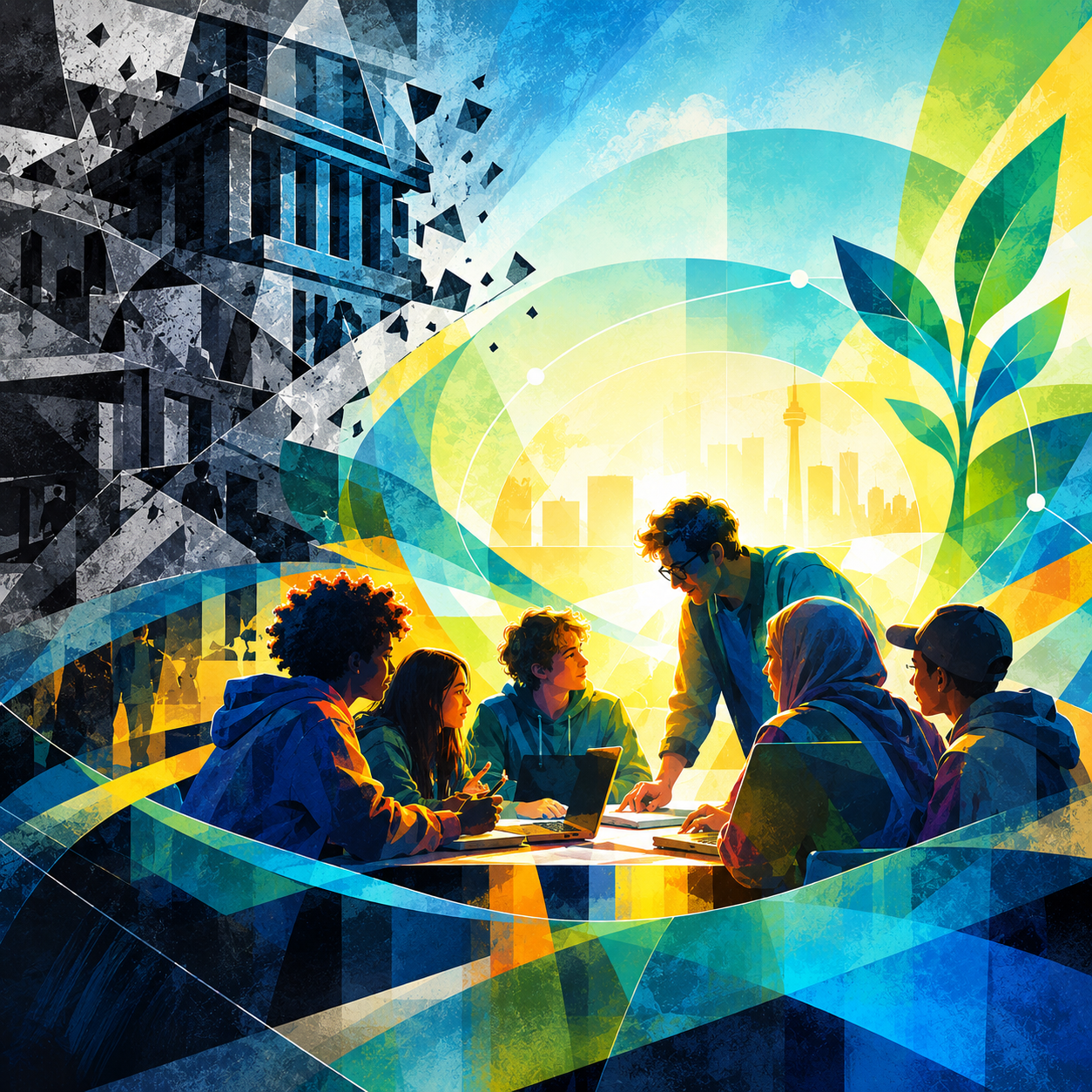
After more than thirty years in education across several countries, I am suspicious of the word system. It suggests something designed, coherent and accountable, a set of parts that fit together under someone who understands the whole. That is no longer what many of us experience. In much of the world, the people working inside public education are creating coherence where the institution itself is losing it.
Teachers, educational assistants, principals, office staff, parents and students create coherence together. Institutions matter, which is exactly why their weakening matters. When capacity falls, somebody still holds the pieces together, and more and more that somebody is the adult standing in front of the students.
The pandemic did not create every problem in our schools, but it exposed them. It showed how much learning depends on stability, belonging and trust, and how much invisible work school staff were already doing. When formal structures strain, people compensate. They make the call after hours, find another way to reach a child tyring to learn, and design a project because the prescribed solution does not fit the students in the room. Over time, improvisation becomes the operating model. #Chaos is also a kind of order, one we have not yet learned to name.
Teachers belong in the design of education policy, not in a consultation held after the important choices are made. We carry enormous professional responsibility with comparatively little institutional power. We decide when a lesson must change, notice the student who has gone quiet, build relationships with families, and adapt all day long. Yet the decisions that shape our work are made far from the classroom. We are not always right, but proximity matters. The person closest to a problem often sees what the person managing it cannot.
Most people meet the state through the institution closest to them, whether a school, a hospital or a local office. When those institutions cannot respond, trust erodes, and people go looking for community elsewhere. Democracy is more than elections. It is the everyday practice of living alongside people who are different from us and working out how to do something together. Schools rehearse that practice every day.
The practical hope is to look for what is already working and ask what conditions allowed it to happen, then create more of those conditions. That kind of reform starts with capacity rather than compliance, and with people rather than structures.
Institutional coherence can weaken without human coherence disappearing. In my classroom, young people from very different places are learning to belong to something together. A project becomes a shared purpose, a difference becomes a way to understand someone else, and a twelve-year-old discovers they have something to contribute. That is how cohesion is built, one classroom at a time.

#Education #TeacherVoice #PublicEducation #EducationPolicy #Democracy #SchoolLeadership #Project-BasedLearning #TeacherRetention #Lern2Ern

