Tag Archives: teachers

The Right to Own What You Learn

In March of 2002, I submitted my LLM thesis at the tail end of what felt like the internet’s wild adolescence. Napster had just been shut down. The DMCA was four years old. The EU Copyright Directive had barely dried on the page. The question I spent 22,000 words trying to answer was this: as digital technology makes it easier than ever to access and share knowledge, who actually owns it — and who gets to decide who can use it?

I argued that the wave of anti-circumvention legislation sweeping through the US, EU, and UK was tipping the balance dangerously in favour of content owners, quietly eroding the public’s right to access and use knowledge freely. I called it the impoverishment of the public domain. I worried about a future where everything we read, watch, or listen to is gated behind a toll. A pay-per-view world.

I graduated. Became a teacher. Put the thesis in a drawer.

Twenty-three years later, I found it again.


Reading it now is a strange experience. On one hand, it feels dated — the anxieties of 2002 were shaped by dialup modems, CD burners, and a music industry still reeling from the shock of digital distribution. On the other hand, it reads like a warning that wasn’t heeded.

Because the impoverishment I worried about didn’t just happen to consumers of commercial media. It happened inside our schools.

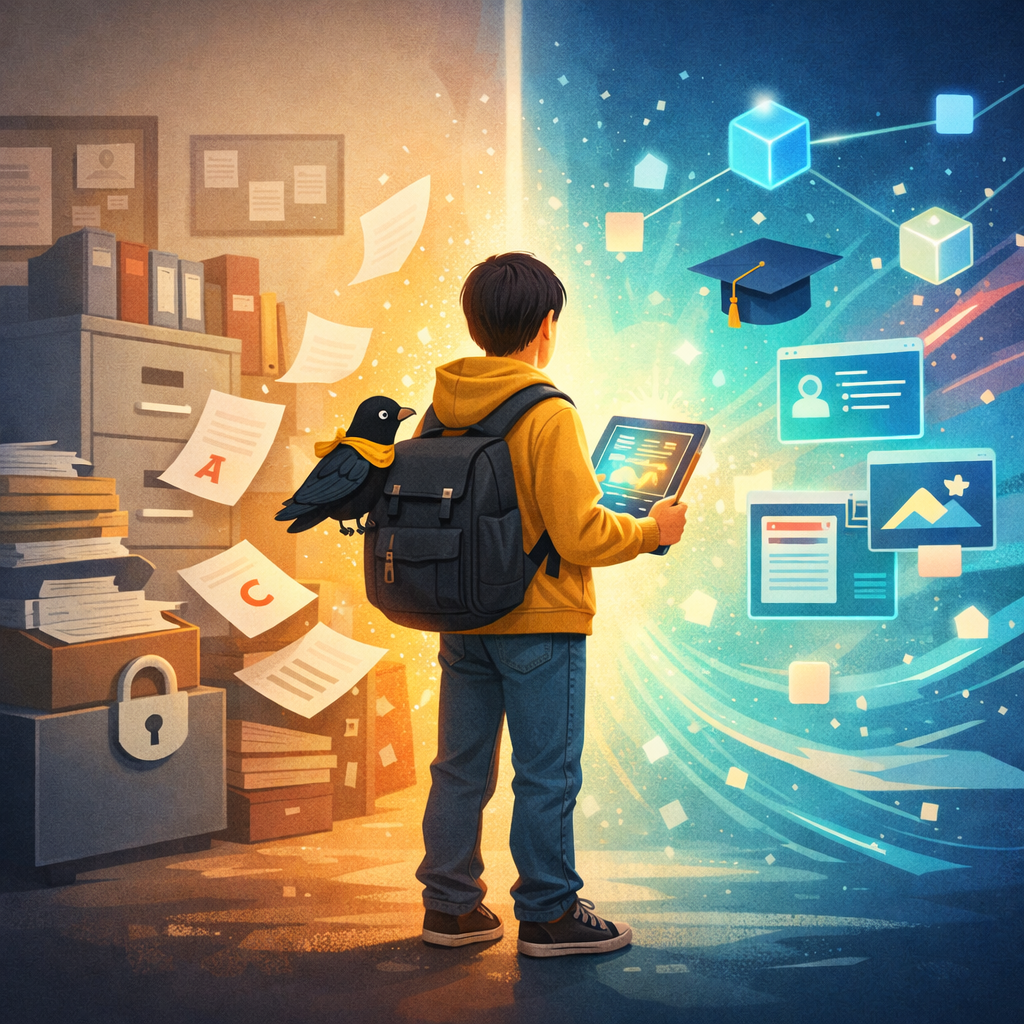
Somewhere along the way — quietly, incrementally, without anyone really deciding it — we built an education system where students create enormous amounts of intellectual and creative work, and own almost none of it. Essays, projects, designs, code, research, portfolios: produced by young people, absorbed into institutional systems, and then lost the moment they graduate. The very people we claim to be educating — preparing for careers, for life, for contribution — leave with credentials on paper but no verifiable proof of the thinking and making they’ve actually done.

That bothered me as a student. It bothers me even more as a teacher.


The insight that eventually became #Lern2ern didn’t come from a policy paper. It came from watching my Grade 7 students work.

I saw kids pour genuine effort, creativity, and original thinking into projects that would be graded, filed, and forgotten. I saw the gap between what they were actually capable of — their real intellectual output — and what the system captured and gave back to them. A letter grade is not a portfolio. A report card is not a career asset. And a school-managed platform is not the same as owning your own work.

My 2002 thesis argued that the fair dealing doctrine — the public’s right to use knowledge — was being chipped away by technology and law working in concert. What I didn’t see then, but understand now, is that the same dynamic was playing out inside education. Students were producing knowledge, and institutions were, by default, holding it.

So I started building something different.


Lern2ern gives students 100% intellectual property ownership of everything they create. Their work is blockchain-verified, meaning it’s tamper-proof, portable, and permanent — a credential that lives with them, not with a school server. It’s built on the principle that if we genuinely believe students are producers of knowledge and not just consumers of it, then we have to treat their work as something that actually belongs to them.

This isn’t just an ethical position. It’s a practical one. In an economy where skills and proof-of-work matter more than ever, students — especially those from under-resourced communities — need assets they can actually use. A blockchain-verified portfolio of real work, built across years of learning, is more honest and more useful than a transcript.

But I also want to be clear about what this is really about. It’s not just about career outcomes. It’s about dignity. When we tell a child that their work matters, and then build a system that treats it as institutional property, we are saying something about whose knowledge counts and who gets to control it. That’s the same question my 2002 thesis was asking, just in a different room.


I’ve been shortlisted for the 2025 QS Reimagine Education Awards in the Nurturing Employability category. When I think about what I’d want people to take away from Lern2ern, it’s not the blockchain piece — though that’s important. It’s the underlying conviction: that students are not raw material to be processed by an educational system, but creators whose intellectual output has real value, and who deserve to own it.

Twenty-three years ago I wrote about the right to access knowledge. Today I’m building a system around the right to own it.

Turns out I’ve been working on the same problem the whole time.


Rich Baxter is a Grade 7 teacher at John McCrae Public School (TDSB), Founder & CEO of Innovation in Education, and creator of the Lern2ern platform. He is shortlisted for the 2025 QS Reimagine Education Award in Nurturing Employability.

#Lern2Ern #StudentOwnership #FutureOfEducation #SkillsBasedLearning #DigitalCredentials #EducationInnovation #OwnYourLearning #StudentCreators #EducationTransformation #ProofOfWork #Web3 #AI #Blockchain

Personalized Professional Development: Fostering Creativity in the Classroom

In today’s dynamic educational landscape, the importance of personalized professional development (PD) for teachers cannot be overstated, especially when it comes to fostering creativity in the classroom. Teachers operate in varied scenarios, whether independently or within a school district, and each context presents unique challenges and opportunities. Regardless of the setting, the primary goal remains the same: to enhance the learning experience for students by encouraging creativity and critical thinking.

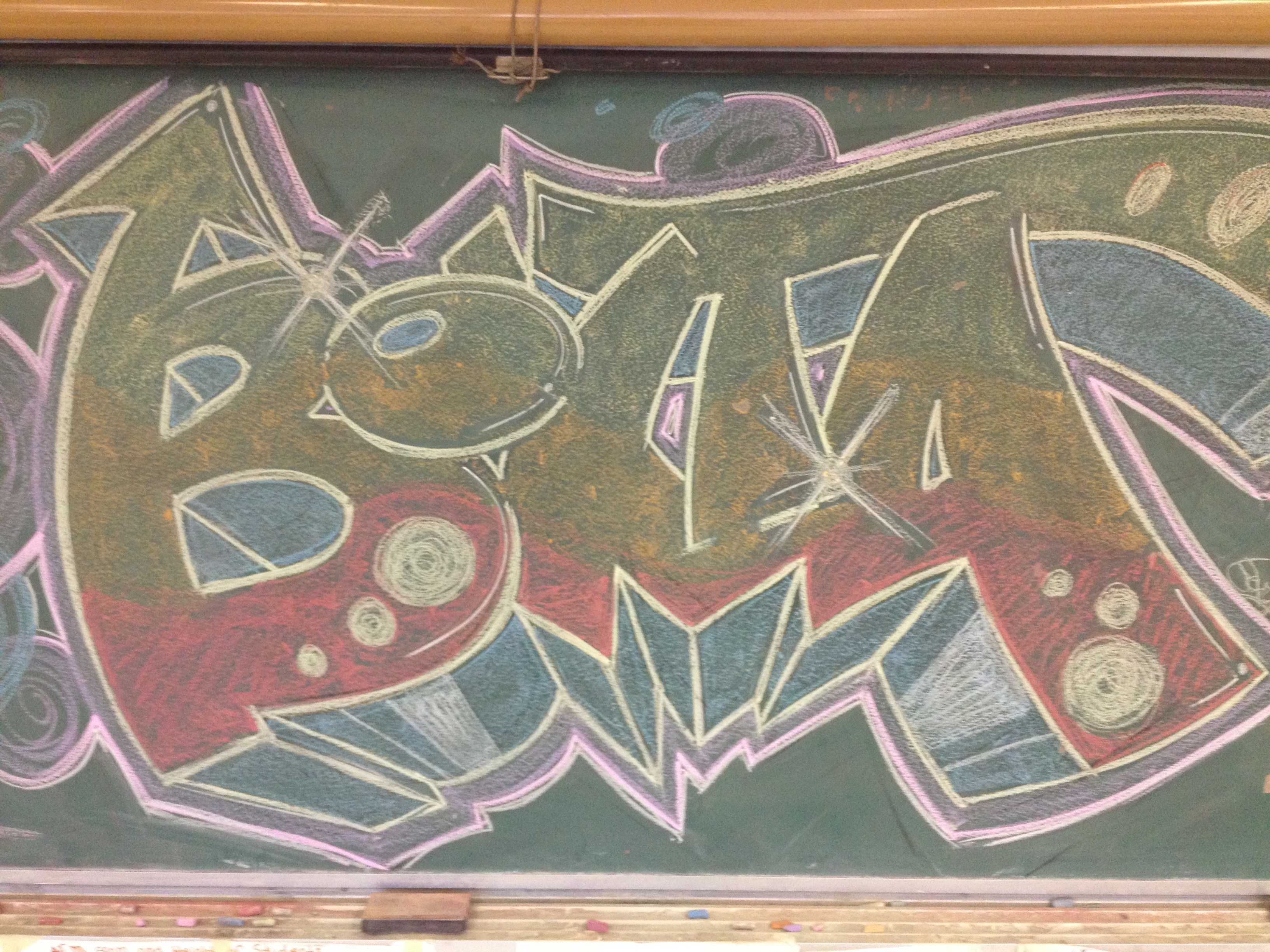
BOXTA 2008

The local context in which a teacher operates significantly influences their professional development journey. In regions where the education system is aligned with the goals of the government, teachers may find themselves encouraged to pursue PD. Conversely, in areas experiencing defunding and de-professionalization, teachers may struggle to access the resources they need. This disparity underscores the need for a more individualized approach to PD, one that prioritizes the teacher’s personal growth and the creative needs of their students.

Professional development should be viewed as a creative endeavor in itself. For me, PD serves my own learning and creativity, which, in turn, benefits my students. My interest lies in improving the student experience, and I actively seek feedback to guide my efforts. It’s crucial to provide students with opportunities to be creative, both inside and outside the classroom. As educators, we must model this behavior, demonstrating that creativity is a valued and integral part of learning.

To foster a creative classroom environment, teachers should be encouraged to conduct action research and develop innovative solutions to the challenges they encounter. This approach requires adopting a project management mindset, focusing on identifying problems and implementing effective solutions. Participation in initiatives such as the Reimagine Education competition, which provides sophisticated guidelines that can be scaled, exemplifies how teachers can transform their classrooms into incubators of ideas and solutions, with their students and communities.

Classrooms that prioritize creativity become breeding grounds for innovative thinking and problem-solving. School districts that support this vision should act as accelerators, providing funding and professional development to help scale these innovative solutions. Most do not.

Critical thinking is a necessary component of any creative endeavor. Traditional summative evaluations often lack room for improvement, failing to allow for iterative processes that encourage reflection and analysis. This rigid approach can be oppressive, demanding compliance from students without fostering their intrinsic motivation. When students engage in iterative processes, they transition from extrinsic to intrinsic motivation, driven by questions that matter to them. Teachers and mentors play a crucial role in guiding this process, helping students to embrace change and pursue creative solutions.

The concept of homework should be reframed as studying, emphasizing the importance of personalized and differentiated learning. Students need the freedom – the space – to curate their own learning materials, documented through sketchbooks, notebooks, and digital tools. These artifacts become valuable resources that can be digitized and used to inform personalized learning experiences – or sandboxes – which will support their usage of artificial intelligence.

BOXTA 2009

Measuring competencies presents a challenge but is not impossible. In Ontario, for instance, ‘learning skills’ are reported on, highlighting the importance of educating parents and guardians about the value of competencies beyond traditional numeric grades. The current educational climate in Ontario, marked by government defunding, poses significant challenges. Student demographic data, including demographics, absences, and report card marks, are now managed by companies like PowerSchool, owned by private equity firm Bain Capital. These entities (‘Education Leaders’) prioritize cost-cutting measures, such as reducing staffing, hardware purchases, tutoring programs, and teacher salary increases, which ultimately undermines the quality of education. In this context, who are our students actually working for?

To counteract these challenges, teachers must empower students to control and articulate their learning journeys. By teaching students to value their data and use it to inform their learning processes, we can foster a generation of creative and independent thinkers. This shift from education to learning involves engaging students in solving local problems and sharing their solutions globally, facilitated by digital platforms and open-source networks (web3!).

The future of education/learning lies in the intersection of global and local contexts, where personalized learning and creativity are prioritized. Technologies such as Web3 and blockchain will drive this evolution, offering new opportunities for engagement and innovation. Teachers and students should own and share their intellectual property on open-source networks and blockchains, ensuring that knowledge is democratized and accessible to all.

Ultimately, teachers should not rely solely on school or district PD programs, which often focus on meeting funding requirements rather than addressing teachers’ expertise and skill sets. Professional development should be personal, driven by the projects and solutions that inspire teachers to improve their students’ experiences. By building their own learning networks and sharing their work globally, teachers can model the freedom and creativity they wish to instill in their students.

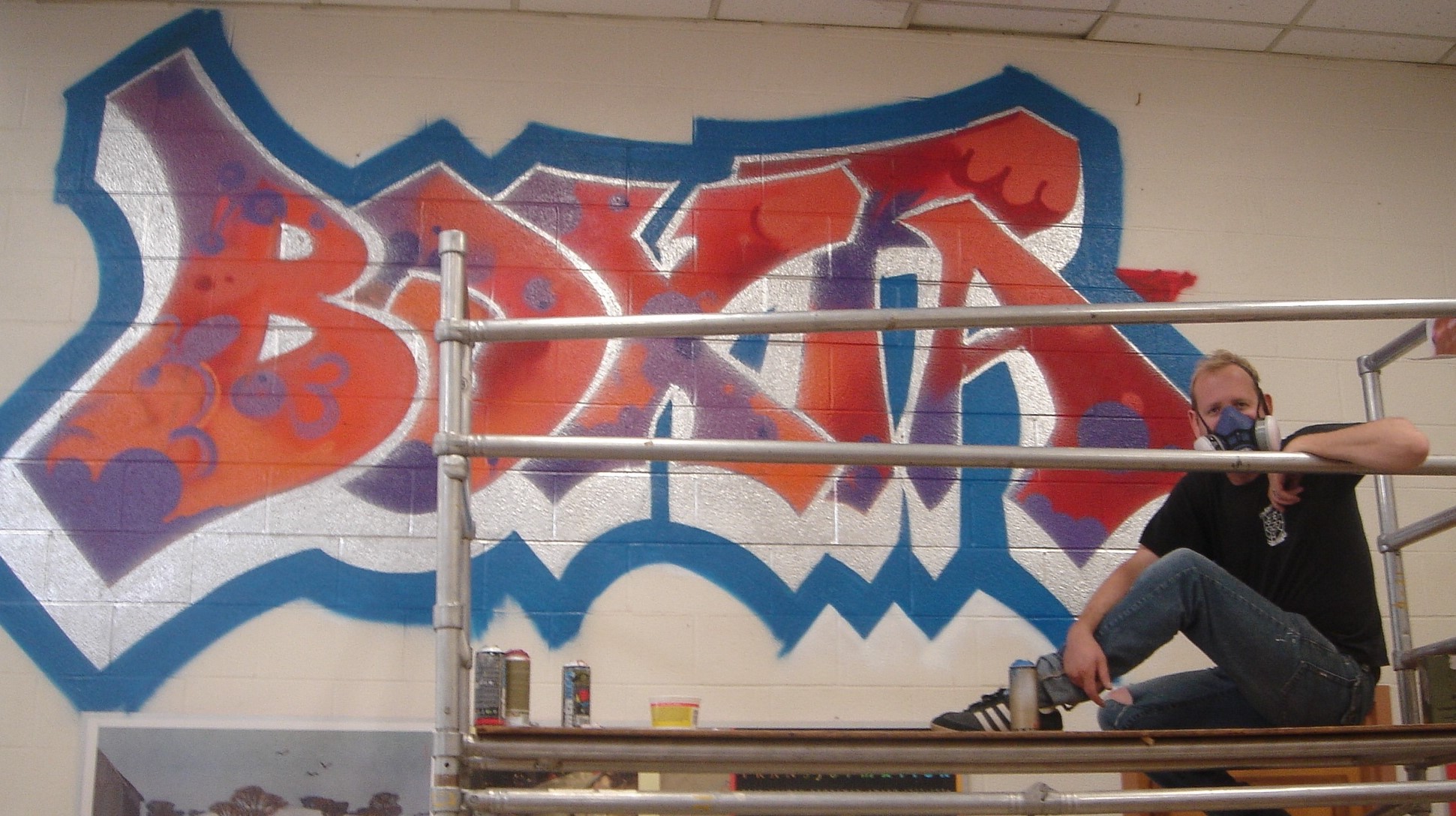
BOXTA 2016

In conclusion, personalized professional development is essential for fostering creativity in the classroom. Teachers must be fierce advocates for their own learning and creativity, taking risks and engaging in processes with unknown outcomes. By creating spaces for students to connect with the analog world before engaging digitally, we can cultivate a learning environment that values creativity, critical thinking, and continuous improvement. Together, we can redefine professional development and empower teachers to transform their classrooms into vibrant, innovative spaces for learning, with or without school districts.


Innovation in Education is a blog dedicated to innovating education. All work posted on this website is free to use under a Attribution-NonCommercial 4.0 International(CC BY-NC 4.0). All opinions and views expressed here are of the Principal.

#PD #Teacherpreneur #Competencies #Creativity #Skills #AI Eduverse #Web3 #DAO #Equity #Education #Community #Crypto #Cryptocurrency #NeverStopInnovating #Ed3 #Regenerative